

(1) البداية: دعوة للكتابة
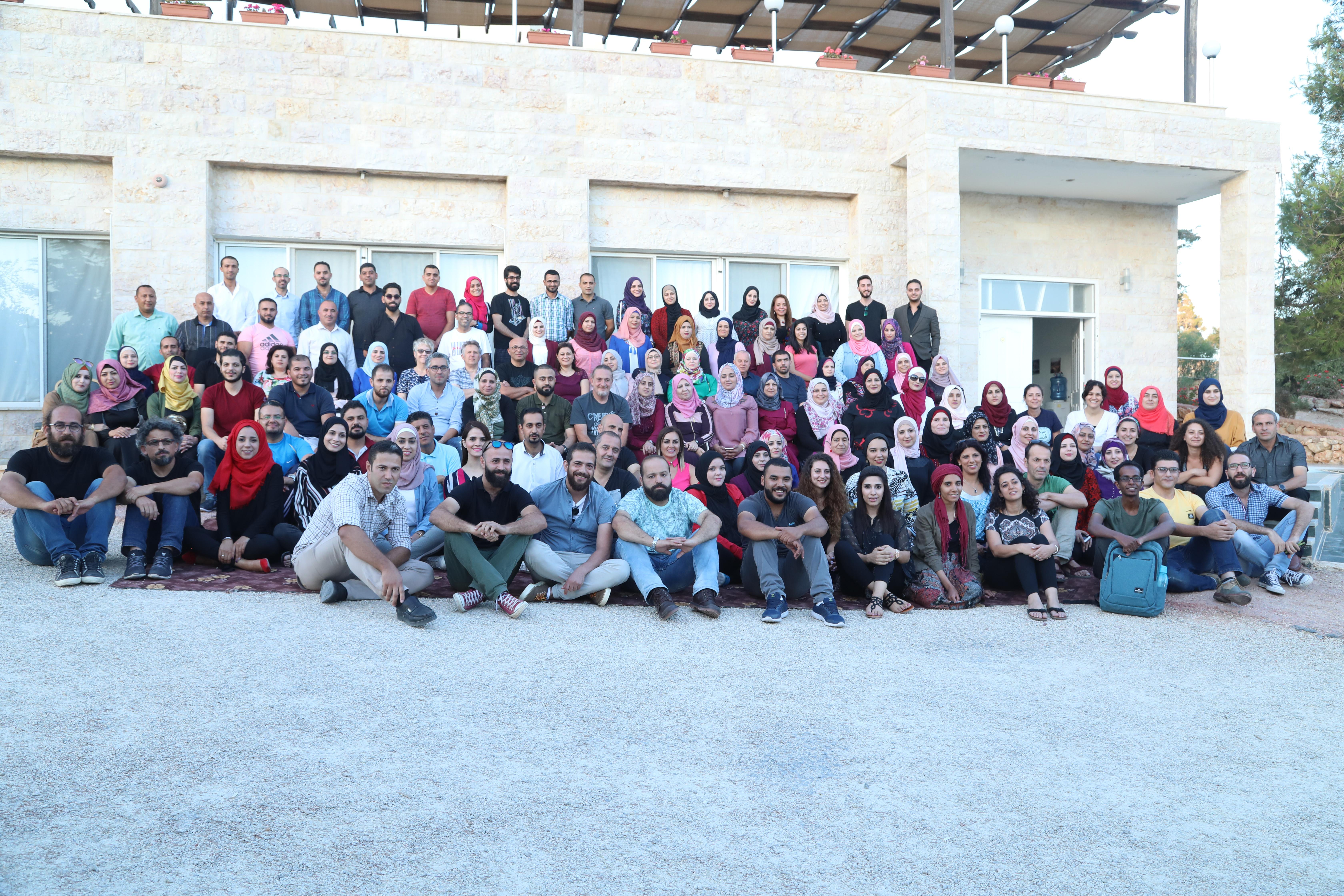
حين اقترح علي أستاذي البروفيسور ديفيد ديفيز اقتراحًا لندوّن فيه ذاكرة من تجربتنا في إنشاء "المدرسة الصيفية: الدراما في سياق تعلّمي" وإدارتها على مدى ثلاثة عشر عامًا (2007-2019)، رأيت في دعوته هذه أكثر من مجرد تدوين. إنها عبورٌ أوليٌّ إلى عالمٍ استثنائي، امتزجت فيه أفكارٌ ورؤىٌ وتجاربُ وثقافاتٌ ولغاتٌ لمنظّرين ومعلمين وفنانين وإداريين من فلسطين والعالم العربي والعالم أجمع. كانت مغامرةً إنسانيةً وتربويةً فريدة، أرى أن الكتابة عنها اليوم هي استحضارٌ لجوهرها، ولسماتها الأولى.

(2) الجذور: بذورُ ما قبل الانطلاق
لا تُروى قصة المدرسة الصيفية من لحظة انطلاقها الرسمي فحسب، بل من إرهاصاتها الأولى التي سبقتها بسنوات. حين أنظر اليوم إلى مسارها، أستطيع أن أتبيّن تلك البذور المتواضعة التي نبتت في تربة الخيال والتوق، ولم تكن لتزهر لولا تضافر جهودٍ فكرية وثقافية وإدارية، تحلّقت جميعها حول فكرةٍ واحدة: خلق مساحةٍ للتجريب والتحرر عبر الدراما. انطلقت المدرسة في العام 2007، واستمرت حتى العام 2019، حيث أنهت جائحة "كوفيد-19" والتغييرات الهيكلية في بنية المؤسسة الإدارية فصلًا من فصولها، لكنها، في ظني، تركت أثرًا لا يُمحى لكثيرين عبروها.

(3) المسار الشخصي: من التقليدي إلى البحث عن مغايرة
قبل انضمامي إلى مركز القطان للبحث والتطوير التربوي (2000-2020)، عملت مدرّسًا للغة العربية في مدارس الفرندز برام الله (1990-1999). اعتمدت في بداياتي على الأساليب الكلاسيكية التي تعلّمتها حينما كنت طالبًا في المدرسة، كأنَّ الذاكرة استعادت صور تدريس معلميَّ حينها. لكنني لم أكن مرتاحًا لها. كان همّي الوحيد هو تجاوز النهج السائد، فاتجهت إلى نصوص أدبية خارجة عن المقرر، مستندًا إلى شغفي بأعمال محمود درويش، وغسان كنفاني، وعبد الرحمن منيف. كنت أبحث عن هويةٍ تربويةٍ خاصة، عن معنىً آخر للتعليم يتجاوز نقل المعلومة إلى خلق وعي.
(4) رؤية للتعليم: بين التحرر الوطني والاجتماعي
لم أكن أرى التعليم مجرد عملية نقل معرفي؛ بل هو فعلٌ يحدث في سياقٍ تاريخي واجتماعي. وكفلسطيني تحت الاحتلال، كان لا بد للتعليم أن ينطلق من سؤال التحرر بمعنييه: التحرر من الاحتلال، والتحرر الاجتماعي من القيم البالية التي تعيق نهضة المجتمع. إلى جانب التدريس، كنت منخرطًا في كتابة الشعر والعمل المسرحي، وهما مجالان ظلّا يتقاطعان مع قضايا الهوية والحرية. وبدأت تتشكل لديّ قناعةٌ بأن هذه النصوص يمكن أن تكون أدواتٍ ثوريةً في حجرة الصف.

(5) نقطة التحول: عندما التقت الدراما بالتعليم
ظلّت العلاقة بين الشعر والتدريس واضحةً لي، بوصفهما ينتميان إلى حقل اللغة والتعبير. لكن العلاقة بين الدراما والتدريس بدت لي غامضةً ومحفوفةً بالمغامرة. كانت الدراما لدي فنًا مستقلاً أعرفه من خلال المسرح، والتدريس ممارسةً تقليدية أعرفها من خلال كوني مدرسًا. إلى أن حضرت محاضرةً للأستاذة سمر دودين في رام الله عن "الدراما في التعليم"، فكانت تلك المحاضرة بمثابة النافذة التي بدأت أطلّ من خلالها إلى عالمٌ جديد ومختلف. منها تعرّفت إلى اسم ديفيد ديفيز، ومنه انطلقت رحلتي إلى جامعة برمنجهام سيتي في بريطانيا عام 1996 لألتحق بالمساق التأسيسي في الدراما في التعليم.

(6) رحلة التكوين: في رحاب برمنجهام
في جامعة برمنجهام، احتضنني ديفيد ديفيز ودعمني رغم محدودية لغتي الإنجليزية آنذاك إلا أن خلفيتي المسرحية قربتني مما يدور في المساقات مع أن القاموس الورقي الصغير لم يكن يقارقني أبدًا. في أحد العروض، قدّمت قصة "Stolen Skin" بالإنجليزية، ثم طلب منّي ديفيد إعادة سردها بالعربية. قال لي: "اللغة العربية تبدو شعرية، وصوتك يمنحها روحًا أخرى". تلك الكلمات لم تكن مجرد مجاملة، بل كانت إضاءةً على قوة اللغة والسياق في العملية التعليمية. التحقت بعدها ببرنامج الماجستير (1997-2000)، وعدت إلى فلسطين بأفكارٍ ثوريةٍ حول الدور الذي يمكن أن تلعبه الدراما في تحرير العقل والوجدان.
(7) من النظرية إلى الممارسة: من الفصل الدراسي إلى مؤسسة القطان
عدت من برمنجهام وأنا أحمل رؤية تربوية متجددة. بدأت بتطبيق ما تعلّمته مع طلابي، وتحوّلت علاقتي بهم من ملقّن إلى محفّز، ومن متكلّم وحيد إلى مُيسّر للحوار وممكن للتلاميذ عبر وضع التحديات أمامهم. في عام 2000، انتقلت إلى مركز القطان للبحث والتطوير التربوي، وهناك وسعتُ دائرة عملي من الطلاب إلى المعلمين. نشرت أطروحة الماجستير التي تناولت فيها أفكار ميخائيل باختين حول تعدد الأصوات والحوارية في كتابٍ بعنوان "المشكالية: من الصوت المفرد إلى الأصوات المتعددة"، وكانت تلك الخطوة تأسيسيةً لنشر فكر درامي تعليمي نقدي.

(8) الولادة: فكرة المدرسة الصيفية تتجسد
نشأت أفكار أولية حول المدرسة الصيفية خلال حوار مع زميلتي في برنامج الماجستير خريسا باباستيثي Chysoula Papastithi ، فحملتُها إلى مركز القطان. بعد حواراتٍ عديدة، وُضعت الفكرة ضمن الخطة السنوية، وشكّلنا فريقًا إداريًا لها. وخلال تواصل حواري مع ديفيد ديفيز طور فكرة مدرسة صيفية على نمط برنامج المدرسة الصيفية الذي كان يديره في الجامعة في بيرمنجهام، وشاركني بتصوّرٍ أكاديميٍ متكاملٍ أصبح نواة البرنامج. انطلقت المدرسة الصيفية الأولى عام 2007 في الأردن (قرية سوف)، بإدارة أكاديمية من ديفيز، وبتدريس ثلاث مجموعاتٍ قادها هو وكوستاس إميروبولوس وأنا. وكانت أول مدرسةٍ صيفيةٍ من نوعها في فلسطين والعالم العربي في هذا المجال وبهذا التكثيف.
(9) التحديات الجغرافية والسياسية: تعلم في ظل الحصار
اخترنا الأردن مقرًا للمدرسة لكونه البوابة التي يستطيع من خلالها معلمون عربٌ كثيرون المشاركة، حيث كان من المستحيل لمعظمهم الدخول إلى فلسطين بسبب القيود الإسرائيلية. حتى تلك الرحلة إلى الأردن لم تكن سهلةً على الجميع؛ فمعلمون من غزة مُنعوا أكثر من مرة من العبور، ومن استطاع منهم واجه رحلةً شاقةً عبر صحراء سيناء والقاهرة. كان ذلك تذكيرًا مستمرًا وقاسيًا بأننا نتعلم ونعلّم تحت وطأة الاحتلال، لكنه أيضًا كان دافعًا لإثبات أن الإبداع يتخطى كل الحواجز.
(10) استمرارية وتطوير: من تجربة محدودة إلى برنامج تراكمي
بعد النجاح اللافت للتجربة الأولى، وتدفق الانطباعات الإيجابية، أدركنا أننا أمام مسؤوليةٍ أكبر. طوّر ديفيز دليلاً أكاديميًا للمدرسة يقوم على ثلاثة مستويات، يشترط للانتقال بينها إنجاز متطلباتٍ عمليةٍ ونظرية: (1) تسجيل المساق، (2) خطط الدروس وتطبيقها وتأملها، (3) القراءات الموجهة، (4) تنظيم ورشة في المجتمع المحلي. لم تعد المدرسة مجرد برنامجٍ صيفي، بل أصبحت مشروعًا متكاملاً تدعمه مؤسسة عبد المحسن القطان بشكلٍ كامل، ويتطوع له أساتذةٌ من حول العالم.

(11) الأثر: هزّ الساكن وتحرير الطاقات
عملت المدرسة في سياقٍ تربويٍ تقليدي نسبيا، فما قدّمته كان بمثابة ثورةٍ على مستوى التطبيق. لقد هزّت يقينيات المعلمين، وفتحت أمامهم آفاقًا جديدةً في الممارسة الصفية. وكانت أهدافها واضحة: مراجعة نقدية للتطورات في نظرية وتطبيق الدراما في التعليم، وفحص دورها وإمكاناتها، وتحفيز المعلمين على تطوير كفاياتهم النقدية والتخيلية في الممارسة المهنية.
(12) منظومة مساندة: أكثر من مجرد مدرسة صيفية
لم تكن المدرسة حدثًا منعزلاً، بل نسجت حولها نظامًا داعمًا: برنامج تأليف وترجمات، حلقة بحثية بإشراف ديفيز، برنامج ترجمةٍ نقل أعمالاً أساسيةً إلى العربية، برنامج تبادلٍ مع مدرسة في بريطانيا، استضافة عروض مسرح في التعليم (TIE)، مشاركة في مؤتمرات عالمية، ومنتدىٌ ثنائي الشهرة للمعلمين. الأهم من ذلك، أنها ولّدت جيلًا من المدربين من خريجيها، وأطروحات ماجستير، وأبحاثًا محلية.


(13) النهاية... أو التحوّل
انتهت المدرسة بصيغتها السابقة في 2020 بسبب الجائحة وتحولات هيكلية في مؤسسة القطان. لكنها لم تمت. لقد تحوّلت من برنامجٍ مكثف إلى حركةٍ تربويةٍ ممتدة، يقودها اليوم معلمون تخرّجوا فيها، خاصةً في غزة، حيث يوظفون الدراما للتعامل مع الحرب وآثارها والإبادة والتهجير في مراكز اللجوء، ويثبتون في كل لحظة أن هذه المنهجيات حيوية حتى في أصعب الظروف.
(14) الخاتمة: استمرار الرحلة
أحمِلُ اليوم خبرة عقدين من العمل في مؤسسة القطان، وأواصل عبر منصة "تعبير" التي أؤسّسها وأديرها، وعبر شراكاتٍ مع مؤسسات تربوية عديدة أهلية ورسمية، ومن خلال الحوارَ مع المعلمين، وتجريبَ رؤى ومنهجيات تستجيب لواقعنا الراهن. إن رحلة المدرسة الصيفية قد تكون توقفت، لكن بذورها لا تزال تُثمر في كل فعل وفي كثير من الصفوف في مدارس تمتد من فلسطين إلى العالم العربي شرقًا وغربًا ، ومع كل معلمٍ ومعلمة قررا أن يجعلا من التعليم فضاءً للحرية والحوار.
فريق التدريس عبر السنوات:
David Davis, Kostas Amoiropoulos, Maggie Hulson, Luke Abbott, Tim Taylor, Richard Kieran, Mike Fleming, Chris Cooper, Philip Taylor, Brian Woolland, Peter O’Connor, Christine Hatton, Giorgos Ioannou, Christina Vasilopoulou, Uwe Gröschel, Elaine Ashbee, Thaleia Kallianta, Chrysoula Papastathi, Evangelia Damianaki, John Airs, Joanne Hanlon, Steve Nolan, Kate Katafiasz, Steve Payne, Demir Orseniszewak, Tag McEntegart, Iona Evans, Moutasem Alatrash, Malik Rimawi, Nader Wahbh, Vivian Tanous, Sawsan Mer’i, Yousf Khawaja, Wasim Alkurdi.
وسيم الكردي
المدير الإداري/الأكاديمي للمدرسة الصيفية، ومنسق ومدير مركز القطان للبحث والتطوير التربوي – مؤسسة عبد المحسن القطان (2000-2020) .
Drama in an Educational Context – The Summer School - Palestine (2007 -2020)
by Wasim Alkurdi
(19) An Invitation to Reflect
When my professor, Professor David Davis, suggested we write articles documenting our rules in creating and managing the Summer School: Drama in an Educational Context across its 13-year journey (2007–2019), I saw this as an opportunity — a preliminary passage — into this rich tapestry woven with countless educators, artists, administrators, and thinkers from Palestine, the Arab world, and beyond. It was a realm where ideas, emotions, visions, experiences, cultures, languages, and methodologies converged. A day will come when I delve into this experience in depth and detail, but for now, this is a beginning.
(19) Roots Deeper Than History
One cannot speak of the Summer School’s story by simply starting from its official launch. Its earliest stirrings began long before — a future then invisible, yet now clear in retrospect. Today, I recognise those true beginnings as its nurturing womb. What seemed then a near-reckless adventure flourished through the synergy of intellectual, cultural, administrative, and co-ordinated efforts, enabling the school’s launch in 2007 and sustaining it until the global lockdown of 2020.
(19) The Traditional Teacher
From 1990 to 1999, I taught at the Friends Schools in Ramallah, Palestine, before joining the Qattan Centre for Educational Research and Development at the A. M. Qattan Foundation (2000–2020). As an Arabic teacher and part of the "Educational Network," in the school, I initially relied on the methods I recalled from my own schooldays — limited in effect, traditional in approach. I taught as I had been taught. My only deviation was incorporating literary texts beyond the curriculum — works by Mahmoud Darwish (Poet), Ghassan Kanafani (Novelist), Abdel Rahman Munif (Novelist), and others — driven by my literary passions. Yet, I remained uneasy, sensing I was meant to be more than a "traditional Arabic teacher" and yearning for another pedagogical path.
(19) A Broader Vision of Education
To me, education has never merely been about acquiring information or skills. It is something far broader: a socio-historical act that must acknowledge the context we inhabit, not ignore it in favour of abstract knowledge. Under occupation, our actions must be guided by two essential liberations:
"liberation from occupation"
and "social liberation" from outdated values hindering societal progress.
Alongside teaching, I engaged in poetry and theatre — both deeply intertwined with societal and historical issues. I saw how each influenced the others: how the works of Darwish, Kanafani, Munif, and playwright Sa’dallah Wannous, all exploring political and social liberation, could become core to education itself.
(19) Two Separate Worlds
While poetry and teaching language and literature felt naturally connected, teaching and drama seemed worlds apart — divergent in methodology, if not culture. An early workshop titled "Writing as a Process" left its mark but focused on technical expression, leaving my deeper hunger unfulfilled.
(19) A Fateful Encounter
By chance, I attended a lecture in Ramallah by theatre professor Samar Dudin, who had come from Jordan to speak on "Drama and Education." It was my first exposure to a shared educational-dramatic context. Inspired, I invited her for coffee, where she mentioned David Davis. I searched for him online, connected, and enrolled in a Summer School Foundation Course in 1996. I returned buzzing with ideas, eager to test what I’d learned in Birmingham with my students. The transformative impact on them and myself compelled me to pursue a Master’s degree from 1996 to 2000, continually integrating my learning into classroom practice.
(19) A Voice in Arabic
At Birmingham City University, David embraced and supported me wholeheartedly, despite my limited English. With a paper dictionary always in hand, I chased meanings of new words. In one course, I designed a drama-based lesson around "Stolen Skin," presenting it first in English. When David asked me to repeat it in Arabic, he remarked:
Arabic sounds poetic; your voice gives it an added soul.
After the 1996 foundation course, I enrolled on the Master’s program in 1997.
(19) A Transformative Journey
The Master’s journey radically reshaped my view of my role as a teacher and my students’ agency. I began weaving my cultural-intellectual background with drama- based pedagogy, creating a teaching practice that remains profoundly influential to this day.
(19) From Classroom to Foundation
In 2000, I transitioned to the Qattan Foundation, working with teachers to integrate Drama in Education (DIE). Expanding my Master’s thesis, I engaged with the ideas of Mikhail Bakhtin — a pivotal watershed in understanding language, dialogue, and dialogism — and published it in Arabic as The Kaleidoscopic: From the Single Voice to Multiple Voices.
(19) The Birth of an Idea
A conversation with my Master’s colleague, Chysoula Papastithi, sparked the idea of an international summer school for drama in education. I proposed it to the Qattan Centre, where, following extensive dialogue, it was adopted into the annual plan. With an administrative team formed, we envisioned a single summer session. My first thought for a leader of the team was David Davis, who welcomed the idea and volunteered. David crystallised the vision, and in 2007, the program became reality. He served as Academic Director, leading one of three teacher groups; Kostas Amoiropoulos and I led the others. Supported by colleagues from PATD (Greece), NATD (UK), and in partnership with The Arab Education Forum (Jordan) and The Arab Theatre Training Centre, this became the first Palestinian educational-cultural initiative in drama-based learning — probably the first of its kind in the Arab world. We held it in Jordan’s picturesque village of Souf, between Jerash and Ajlun (Jordan), despite the intense heat.
(19) The Political Context
Jordan’s accessibility made it the ideal host, as most Arab teachers couldn’t enter Palestine due to Israeli border controls. Some Gazan teachers were denied entry to Jordan by Israeli authorities; those who succeeded endured a gruelling journey: Gaza to Sinai, Cairo, then flight to Jordan.
(19) The Journey Continues
After the first summer, we returned home proud yet challenged: Where next?
Positive feedback from participants and internal evaluation convinced us to continue and develop the School. David enthusiastically refined its guide, structuring it around three levels with four requirements for progression:
1. A course record
2. Lesson plans: implementation and reflection
3. A reading assignment
4. A workshop in the local community
(19) A Collective Effort
Sustaining the School for thirteen years demanded a dedicated team. The Qattan Foundation shouldered full administrative and financial responsibility, while teachers volunteered — many with travel expenses covered.
(19) A Revolutionary Pedagogy
Operating in a challenging context, the School offered ideas and methodologies that revolutionised educational practice. While progressive discourse existed in Palestinian society, the Summer School provided tangible visions for classroom change, shaking convictions and continuing to inspire.
Its goals were:
iii) A comprehensive review of major developments in Drama in Education theory and practice.
iii) A critical examination of its role and current concerns.
iii) Fostering informed imaginative and critical competence in professional practice.
(19) Building a Meaningful Ecosystem
To ensure depth, the School extended beyond the summer weeks with diverse year-round initiatives:
a research circle led by David;
a translation programme producing Arabic resources; teacher exchanges with the First Woodrow School (UK); Theatre in Education (TIE) programmes;
international conferences;
and bi-monthly teacher forums for sharing experiences.
It cultivated mentors from among its participants and inspired Master’s theses across Palestine and the Arab world.
(19) The End of an Era, The Start of a Legacy
The School’s format ended in 2020 due to COVID-19 and organisational shifts at the Qattan Foundation. Yet Drama in Education in Palestine endures as a living practice, carried forward by teachers in diverse settings.
(19) The Legacy in Gaza
Notably, many participants were from Gaza. Today, they teach children in refugee centres under extreme conditions — testament to drama’s power in contexts of war, genocide, and displacement.
(19) Carrying the Legacy Forward
Now, I carry two decades of Qattan’s legacy into new ventures: through the Tabiir platform I founded and direct, and through direct work with teachers under the auspices of the Ministry of Education, integrating drama into cumulative, ongoing programmes.
(19) Teaching Faculty Over the Years
David Davis, Kostas Amoiropoulos, Maggie Hulson, Luke Abbott, Tim Taylor, Richard Kieran, Mike Fleming, Chris Cooper, Philip Taylor, Brian Woolland, Peter O’Connor, Christine Hatton, Giorgos Ioannou, Christina Vasilopoulou, Uwe Gröschel, Elaine Ashbee, Thaleia Kallianta, Chrysoula Papastathi, Evangelia Damianaki, John Airs, Joanne Hanlon, Steve Nolan, Kate Katafiasz, Steve Payne, Demir Orseniszewak, Tag McEntegart, Iona Evans, Mutasim Alatrash, Malik Rimawi, Nader Wahbh, Vivian Tanous, Sawsan Mer’i, Yousf Khawaja, Wasim Alkurdi.
The JOURNAL for DRAMA in EDUCATION
The National Association for the Teaching of Drama
Volume 40, Issue 1
Autumn 2025
ISSN 1476 – 9395